The Best Backpack for College Students: What You Actually Need
College packing is its own challenge. You're carrying a laptop, chargers, notebooks, a water bottle, maybe a change of clothes for after class, snacks because dining hall hours never line up with your schedule, and probably a few things you forgot you threw in last week. You need a backpack that handles all of that without falling apart, smelling weird by October, or looking like something you bought for middle school.
The best backpacks for college aren't the ones with the most features or the loudest branding. They're the ones that carry what you need, last through four years of daily use, and look good enough that you'd actually want to bring them to a study session, a weekend trip and a post-grad job interview.
Here's what to look for, and what you can skip.
What Actually Matters in a College Backpack
Most college backpack guides throw twenty features at you. You don't need twenty features. You need these five:
- A padded laptop pocket: This is non-negotiable. Your laptop goes everywhere with you, and a dedicated padded sleeve keeps it protected without adding bulk. Make sure the pocket fits your laptop size (13-inch and 15-inch are the most common).
- Interior organization: A single-cavity backpack becomes a black hole by week two. You want at least one interior zip pocket for small items (charger, earbuds, pens), one larger section for books or a folder, and ideally a back slip pocket for your phone or ID.
- Lightweight material: You're carrying this across campus several times a day. If the bag itself weighs 3 lbs before you've packed anything, that's 3 lbs of dead weight you're lugging to every class. Nylon twill gives you structure without the heaviness of leather or canvas.
- Easy to clean: Coffee spills, library floors, bus seats, the bottom of a lecture hall. Your backpack will touch all of it. A material that wipes clean with soap and water beats one that needs professional care.
- A look you won't outgrow: The best college backpacks for women work beyond campus. A clean, well-made backpack transitions into post-grad life without screaming "student." Skip the novelty prints. Choose something you'd carry to a first job.
How to Choose the Right Size
Most college students do well with a backpack in the 25-35 liter range. That's enough for a laptop, a notebook or two, a water bottle, chargers and personal items without feeling oversized.
- If you're carrying less (just a laptop and a few things): a smaller pack around 15-20 liters works for lighter class days.
- If you're commuting and need to carry more (gym clothes, a packed lunch, extra layers): lean toward the larger end.
The key is that your backpack shouldn't be half-empty most of the time or bursting at the seams. Match the size to what a normal day actually looks like, not the worst-case scenario.
shortyLOVE Backpacks for College
shortyLOVE makes three backpacks, all nylon, all lightweight, all designed with the kind of organization that makes a real difference when you're moving through a busy day.
The Boxer
- The boxer is the largest option.
- It fits a laptop, textbooks, chargers, a water bottle and a change of clothes across multiple zip compartments, so your clean shirt isn't sitting under your sneakers.
- Nylon twill from the O.G. collection keeps it significantly lighter than most backpacks its size.
- The blush interior lining means you can actually see what's inside instead of digging through a dark bag between classes.
Best for: heavy class days, commuters, students who carry a lot.
The Tate
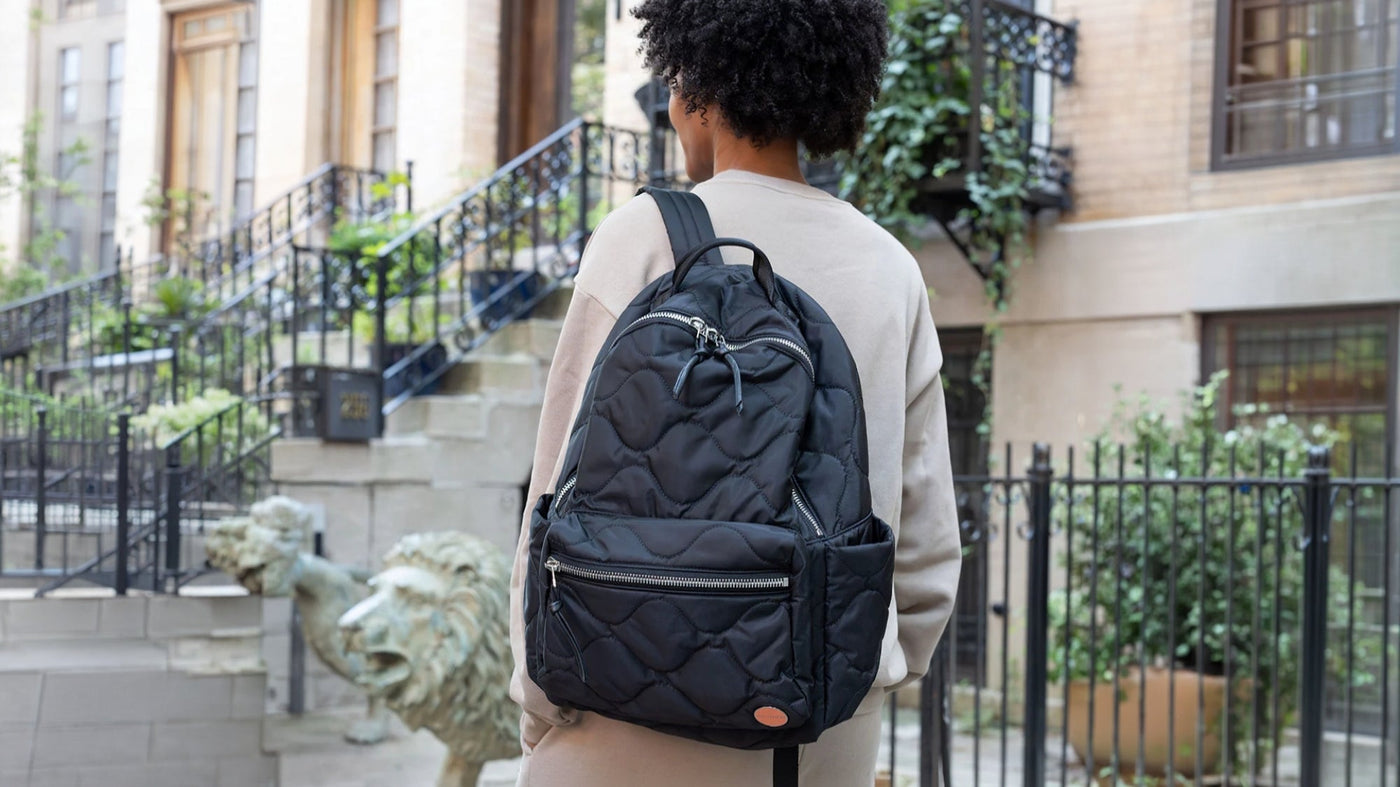
- The tate has the same smart layout in a slightly smaller frame, with the quilted nylon finish from the wave quilt collection.
- More textured, more polished.
- If your college days include internships, meetings or campus events where you want your backpack to look a little more put-together, the tate bridges that gap.
Best for: lighter loads, students who move between class and professional settings.
The Two-Bag System For College
Here's a setup worth trying:
- Carry your backpack for the heavy haul (commute, full class day, travel weekends).
- Keep a small crossbody for the days when you just need your phone, wallet and keys.
The shorthand or amuse tucks inside your backpack when you're not using it and takes up almost no space. Pull it out for a quick library run, a dinner off campus or a weekend where you don't want to carry the full pack. It's the same two-bag system that works for travel, adapted for campus life.
Quick Reference: Match Your College Routine to Your Bag
| Your typical day | What you're carrying | Best pick |
|---|---|---|
| Full class load, commuting | Laptop, textbooks, water, chargers, lunch | the boxer |
| Light class day, campus-based | Laptop, notebook, wallet, phone | the tate |
| Study session or library run | Phone, wallet, earbuds | the shorthand or amuse |
| Weekend trip home or getaway | Clothes, laptop, toiletries | the boxer + a crossbody tucked inside |
Why Material Matters More in College Than Anywhere Else
Your college backpack gets more daily abuse than almost any other bag you'll own. It goes from a bus floor to a library desk to a grass quad to a dining hall bench, every single day. Leather can't handle that without cracking, fading or needing regular conditioning. Canvas absorbs stains and gets heavy when wet.
Nylon twill is the material that makes sense for this stage of life. It wipes clean, holds its shape after years of daily use, doesn't absorb moisture and weighs next to nothing. Both the boxer and the tate are built from it.
And if it matters to you (it matters to a lot of college students right now): both are vegan and cruelty-free. No animal products, no leather, no compromises on materials. shortyLOVE is also woman-owned and independently run, designed by Sloane Gibney Grossberg, who spent over a decade at Marc Jacobs before starting her own brand. Supporting independent, values-driven brands is something this generation genuinely cares about, and this is one that actually delivers on what it promises.
Your Backpack Should Last Longer Than Your Major
The best backpack for college is the one that works on day one and still looks good at graduation. Lightweight, organized, easy to clean, and built to handle four years of hard daily use without falling apart. That's it. No gimmicks, no unnecessary features, just a bag that carries what you need and stays out of your way.
Browse shortyLOVE's full backpack collection to compare the boxer and tate side by side. Or take the style quiz to figure out whether a backpack, tote or crossbody fits how you carry.
Frequently Asked Questions
What are the best backpacks for college women?
The best college backpacks for women are lightweight, have a padded laptop pocket, offer interior organization and are made from a material that handles daily abuse without needing special care. Nylon twill checks all of those boxes and doesn't add the dead weight that leather or canvas brings.
What size backpack do I need for college?
Most college students do well with 25-35 liters. That's enough for a laptop, notebooks, a water bottle and personal items. If you carry less, a 15-20 liter pack works for lighter days. Avoid going too large unless you're commuting with extra gear.
Should I get a backpack or tote for college?
A backpack frees both hands and distributes weight across your shoulders, which makes it better for longer walks across campus. A tote gives you faster access and works better for shorter commutes or professional settings. Some students use both: a backpack for class days and a tote for internships or lighter schedules.
How long should a college backpack last?
A well-made nylon backpack should last all four years of college and beyond. The key factors are material quality, reinforced stitching at stress points and durable hardware (metal zippers and clasps over plastic). Avoid cheap bags that save money upfront but need replacing after a semester.
Is nylon better than canvas for a college backpack?
For daily college use, yes. Nylon is lighter, easier to clean, dries faster when wet and holds its shape better over time. Canvas is heavier, absorbs stains and moisture, and tends to lose structure after sustained daily use. Nylon also doesn't develop odor the way canvas can.
What should I look for in good backpacks for college?
A padded laptop sleeve, at least two interior compartments, lightweight material (under 2 lbs empty is ideal), easy-clean fabric and a design that doesn't look dated after a year. Skip bags with excessive external straps, buckles or branding you'll get tired of.

Written by sloane grossberg