The Farmers Market Bag You Actually Want to Carry Every Saturday
You've done the hard part. You woke up early on a Saturday, found parking and made it to the farmers market before the good strawberries disappeared. Now you're standing at the first stall with a flimsy canvas tote that won't stay open, digging past three bags of kale to find your wallet at the bottom. The bag is already leaning sideways in the crook of your arm. You haven't even made it to the bread vendor yet.
The farmers market bag you grab on the way out the door matters more than most people give it credit for. The wrong one turns a relaxing morning into a produce-juggling act. The right one stands upright at a stall, keeps fragile items separate from heavy ones, stays comfortable on your shoulder for the walk home and still looks like something you'd carry into a coffee shop afterward.
This guide breaks down what makes a farmers market bag actually useful, how to pack one so nothing gets crushed and why the bag you already own might not be the right one for the job.
Why Most Market Bags Fall Short
The standard reusable grocery tote is designed for a quick trip to the supermarket where everything is already in containers. A farmers market haul is different. Loose tomatoes sit next to glass jars of honey. A wet bunch of radishes drips onto a loaf of sourdough. A heavy butternut squash settles to the bottom and slowly crushes everything beneath it.
Here's where most bags fail:
- No structure: Floppy totes collapse the moment you set them down. You end up holding the bag open with one hand while paying with the other.
- No organization: A single-compartment bag means your phone lives under three pounds of root vegetables. Your eggs share space with a watermelon.
- No closure: Open-top bags let items shift and spill during the walk to the car. One sudden stop and your peaches are on the pavement.
- No durability: Thin cotton or polyester bags stretch, stain and rip under the weight of a full market haul. Most last one season before the handles give out.
- No style: This one sounds shallow until you realize that a bag you're embarrassed to carry is a bag you leave in the car. The best farmers market bag is the one you actually bring with you.
What to Look for in a Farmers Market Bag
Before you buy another tote that ends up crumpled in a drawer, here's what actually matters for a bag that handles a real market trip.
| Feature | Why it matters at the market | What to avoid |
|---|---|---|
| Structured bottom | Stands upright at stalls so you can load with both hands | Bags that collapse when set down |
| Zip-top closure | Keeps contents secure during the walk home | Open tops that let items shift and fall |
| Deep side pockets | Separates water bottles and tall items from produce | Single-cavity bags with zero organization |
| Durable material | Handles 10+ lbs without stretching or tearing | Thin cotton that absorbs stains and moisture |
| Comfortable straps | Stays on your shoulder even when fully loaded | Narrow straps that dig in under weight |
| Wipe-clean surface | Cleans up after berry juice, dirt and condensation | Untreated fabric that absorbs every spill |
The Reusable Grocery Tote Problem
Most guides for a reusable grocery tote for women recommend the same thing: a folding nylon bag you can stuff into your purse. Those bags are fine for grabbing a few items at a convenience store. They are not fine for a two-hour farmers market trip where you're accumulating weight gradually and need your bag to hold its shape the entire time.
A proper farmers market tote needs to do double duty. It needs the capacity of a grocery bag and the structure of a handbag. Flat bottom so it stands up. Closure so things stay put. Material that handles moisture without absorbing it. And a look that doesn't scream "I'm carrying groceries" when you stop for coffee on the way home.
How to Pack a Farmers Market Bag So Nothing Gets Crushed
The order you load your bag matters as much as the bag itself. Most produce damage happens because heavy items end up on top of soft ones, or because everything shifts during transit.
The layering system
- Bottom layer: heavy and sturdy. Potatoes, onions, squash, apples and jars go in first. These anchor the bag and can handle weight on top of them.
- Side pockets: tall and fragile. Water bottles, a baguette, a bunch of celery or carrots stay upright in side pockets where they won't fold or snap.
- Middle layer: medium-weight items. Peppers, cucumbers, citrus and anything with a firmer skin go here.
- Top layer: soft and delicate. Berries, ripe stone fruit, tomatoes, herbs and leafy greens go in last and stay on top where nothing can crush them.
- Separate entirely: eggs and flowers. Eggs belong in their own protected spot, never under other groceries. Flowers stay upright with stems wrapped in a damp towel.
The golden rule
Shop in reverse order of fragility.
- Buy heavy, hardy items first so they go into the bag first.
- Save berries, bread and eggs for the end of your trip so they ride on top.
If your market is a single row, walk the full loop once to see what's available, then shop on the way back in packing order.
The Farmers Market Bag Checklist
Not sure if your current bag is up to the job? Run it through this quick checklist.
| Test | Pass | Fail |
|---|---|---|
| Set it on a table empty | Stands upright on its own | Collapses or tips over |
| Load it with 10 lbs | Holds its shape, straps stay comfortable | Stretches, sags or digs into your shoulder |
| Spill water on the surface | Beads up, wipes clean | Absorbs into the fabric |
| Close the top | Zips, snaps or folds shut securely | Stays wide open with no closure option |
| Find your phone in 5 seconds | Dedicated pocket, easy to reach | Buried under produce somewhere |
| Carry it into a restaurant | Looks intentional | Looks like a grocery sack |
If your current bag fails more than two of those, it's time for an upgrade.
A Farmers Market Bag That Does Everything on the List
shortyLOVE builds totes for people who actually use their bags hard, not for people who leave them on a shelf. Every bag uses vegan nylon that wipes clean, holds its shape and stays light no matter how much you load into it.
The tillie: your structured market tote
The tillie medium tote is built for exactly this kind of morning. The flat, structured bottom means it stands upright on a vendor's table, in the trunk of your car or on a coffee shop floor without tipping. Two deep side pockets hold water bottles, baguettes or a bunch of flowers upright and separated from your main haul. The zip-top closure keeps everything secure during the walk home or the drive back. And the plush nylon twill wipes clean after strawberry juice, condensation or the general mess of fresh produce.
Ten colorways mean you pick the one that fits your weekend style, not the one that screams "grocery run." The tillie is a farmers market bag that works just as well at the office on Monday as it does at the stalls on Saturday.
The wonder: for bigger market hauls
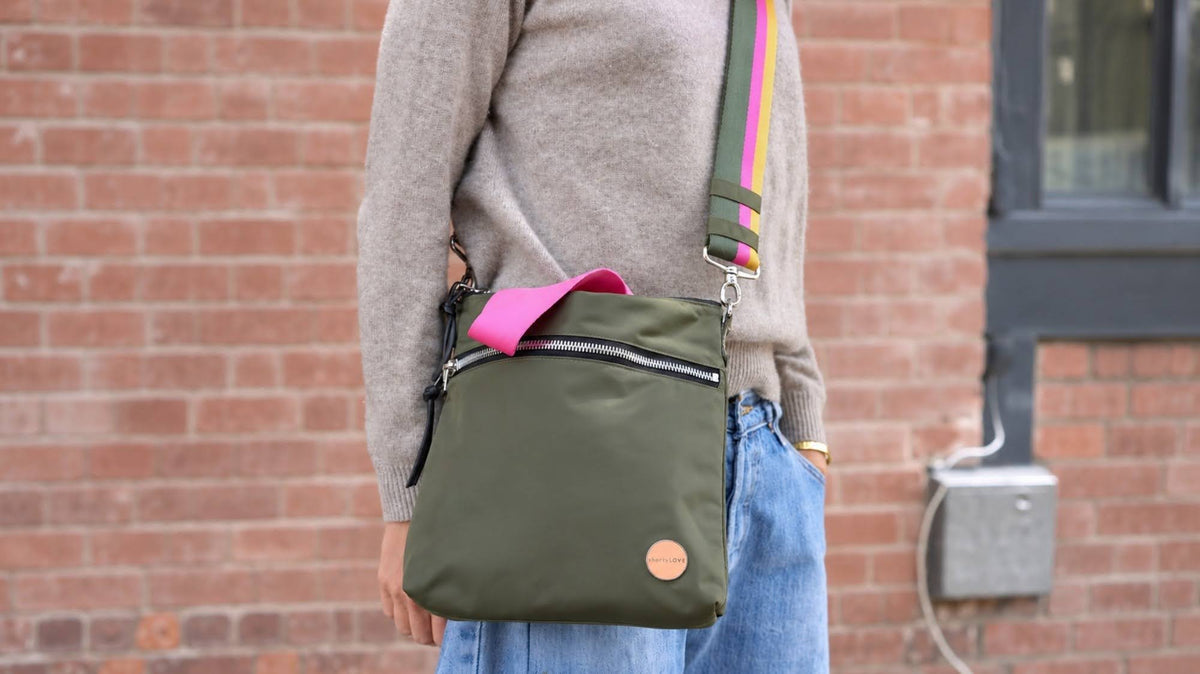
If your Saturday haul regularly fills two bags, the wonder large crossbody gives you more room without being as much of a bag as a full-size tote. At 15.5 inches by 14 inches, it handles a serious produce run while switching between crossbody, shoulder and top-handle carry depending on how heavy the load gets. The zip closure and nylon twill exterior keep everything secure and clean.
The wonder is the farmers market bag for anyone whose Saturday shopping regularly feeds a household rather than just one person. Ten colorways and the same blush interior lining that makes finding your wallet under the kale a lot easier.
Keep the small stuff organized
The worst part of any tote is losing your phone, keys and wallet under the groceries. The stevie solves this. It's a coated nylon dopp-kit pouch that drops into any tote and keeps your essentials in one wipeable container. When you need your wallet at a stall, pull the whole pouch out. When you switch bags for the rest of the weekend, move one pouch instead of hunting for twenty loose items.
Go hands-free for the walk
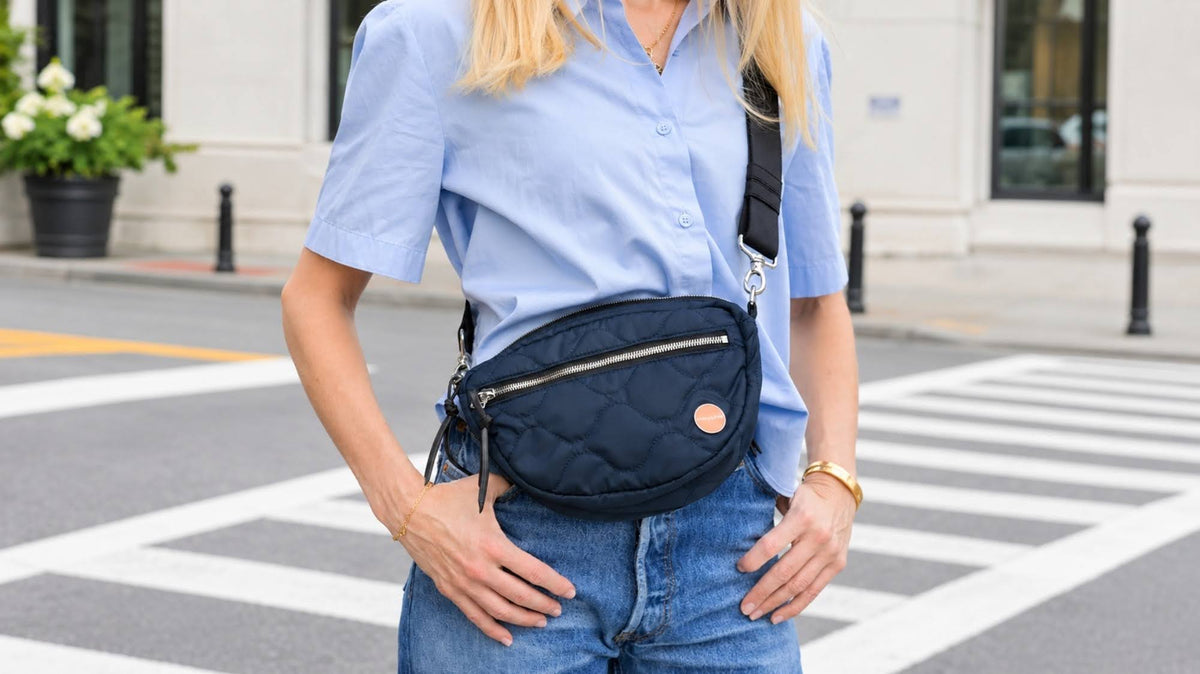
If you prefer to browse without a heavy bag on your shoulder, the bea is a small quilted sling built for exactly this. Mesh side pockets fit a water bottle, the main compartment holds your phone, wallet and keys and the crossbody fit keeps both hands free for picking out tomatoes. It pairs with a tote left at the car or stroller so you shop light and load heavy on the way back.
Farmers Market Bag Care: Keep It Clean Week After Week
A farmers market bag takes more abuse than most everyday bags. Produce drips, dirt transfers and the occasional container leaks. Here's how to keep yours in good shape.
- Wipe after every trip: A damp cloth handles 90% of market mess. Don't let berry stains or soil sit overnight.
- Empty completely: Shake out any leaves, dirt or debris before storing. A stray strawberry at the bottom of a closed bag is a problem by Tuesday.
- Air dry: If the bag gets wet from rain or condensation, leave it open to dry rather than zipping it shut damp.
- Store upright: A structured tote keeps its shape longer when stored standing up rather than folded flat.
Nylon is naturally resistant to staining and moisture, so a quick wipe-down is usually all it takes. No special cleaning products needed.
Find Your Saturday Morning Bag
The best farmers market bag is the one that makes the whole morning easier. It stands up at a stall so you can load it with both hands. It keeps fragile produce separated from heavy items. It zips shut for the walk home. It wipes clean after the inevitable juice leak. And it looks good enough that you don't switch bags for the coffee stop after.
Every shortyLOVE tote is vegan, cruelty-free nylon that zips shut and ships free. Browse the full tote collection to compare the tillie and the ranger side by side. Not sure which size fits your typical market haul? Take the style quiz for a recommendation based on what you carry and where you're headed.
Frequently Asked Questions
What's a good bag for the farmers market?
A good farmers market bag has four things: a flat bottom that stands upright, side pockets for bottles and tall items, a closure that keeps contents secure and material that wipes clean. Canvas bags are popular but absorb moisture and stains. Nylon bags handle the mess of fresh produce better because they dry fast and clean with a damp cloth. Look for a structured tote with a zip top rather than a floppy open bag.
How big should a farmers market bag be?
That depends on how much you typically buy. A medium tote works for one or two people shopping for a week of produce, bread and a few extras. A large tote handles family-sized hauls or trips where you're buying in bulk. The key is picking a size you can comfortably carry when it's full, not just when it's empty. A 10-to-15-pound loaded weight is a reasonable target for a shoulder bag.
Can I use a regular tote bag for the farmers market?
You can, but most regular totes create problems at the market. They collapse when you set them down, they have no internal organization and they stay wide open during transit. A purpose-fit farmers market tote with a structured bottom, side pockets and a zip closure prevents the crushed-berries-under-the-squash situation that regular totes are famous for.
What's the best way to keep produce from getting crushed?
Pack in layers: heavy, sturdy items on the bottom (potatoes, squash, jars), medium items in the middle (peppers, citrus) and soft, delicate items on top (berries, tomatoes, herbs). Keep eggs and bread in separate pockets or compartments. Shop heavy items first so they load into the bag first and soft items last so they stay on top.
Is a reusable grocery tote good enough for the farmers market?
Standard reusable grocery totes work for a quick grocery store trip but tend to fall short at the farmers market. Market trips involve loose produce without packaging, wet items like fresh herbs and varying weights that shift as you walk. A structured tote with pockets and a closure handles these challenges better. The difference is organization: a grocery tote is a bag with space while a good farmers market bag is a bag with a system.
How do I keep my farmers market bag clean?
Wipe the interior and exterior with a damp cloth after each trip, paying attention to any spots where produce juice or soil transferred. Empty the bag completely and shake out debris before storing. If the bag got wet, leave it open to air dry before zipping it shut. Nylon bags are especially easy to maintain because they resist staining and don't absorb moisture the way cotton or canvas does.

Written by sloane grossberg