The Diaper Bag Alternative for Moms Who Don't Want to Look Like They're Carrying a Diaper Bag
Somewhere around the third trimester, someone will tell you that you need a diaper bag. Not just any bag. A diaper bag. With padded changing stations, insulated bottle holders, antimicrobial linings, a dedicated wet pocket, and a pattern that broadcasts "I am carrying baby supplies" from twenty feet away.
And you will look at that bag and think: I do not want to carry that. You are not alone. A growing number of parents skip the traditional diaper bag entirely, using a regular bag that holds diapers, wipes, a change of clothes and a snack without looking like it was designed exclusively for that job. The trick is knowing what to look for so you end up with a bag that works as hard as the dedicated version without the visual baggage.
What actually makes a bag work as a diaper bag
Before you grab the nearest tote and call it done, it helps to know what separates a bag that handles baby gear well from one that turns into a frustrating black hole by noon. Four things matter more than any "diaper bag" label:
Structure: The bag needs to sit upright on a floor, a bench or a restaurant table without collapsing. When one hand is holding a baby and the other is reaching for wipes, a floppy bag is not your friend. A flat or squared bottom that keeps the bag standing is the single most useful feature in any bag pulling double duty.
Wipeability: Diaper blowouts happen. Formula spills happen. Smashed banana happens. Your bag needs to survive a quick wipe-down without staining or absorbing the mess. Nylon and coated canvas handle this well. Uncoated leather and suede do not.
Easy access: A complicated clasp or a narrow opening slows you down at the worst possible moment. Zip-top closures that open wide are ideal because you can reach in with one hand while the other holds a squirming toddler. Bonus if the bag has exterior pockets for the items you grab most often.
Compartments: A single-cavity bag means everything ends up in one pile. Bottles press against your phone. A pacifier disappears under a spare onesie. Look for zip and slide pockets that give bottles, wipes, a change of clothes and your own essentials their own predictable spots.
Why most regular bags fall short
The idea of using any bag as a diaper bag is sound. The execution is where it gets tricky.
A leather tote looks great, but leather shows stains from milk and food, weighs more than you want when it is already full of baby gear, and does not clean as easily as the brand probably claims. A canvas bag is lightweight but absorbs moisture and is harder to wipe down on the go. A structured handbag may sit upright, but if it only has one interior pocket, you are still rummaging through a pile every time you need a diaper.
The stylish stand-in that actually works needs to combine the organization of a proper diaper bag with the look and weight of an everyday bag. That combination is rarer than it should be. Most bags get one side of the equation right and miss the other.
Why nylon checks every box
Nylon solves the problems that trip up most diaper bag alternatives in one material. It wipes clean in seconds with soap and water. It does not absorb milk, formula or sunscreen. It is significantly lighter than leather, which means more of your bag's weight goes toward what you are carrying instead of the bag itself. And it holds its shape well enough to stand upright and open wide when you need to reach in fast.
That combination of cleanability, light weight and structure is why nylon works so well for the mom bag that doesn't look like a diaper bag. It handles the mess without showing the mess, and it does it without the bulk or the "baby gear" aesthetic that makes traditional diaper bags so identifiable.
Picking the right format for the outing
Not every outing with a baby needs the same bag. A full day out with multiple feedings, changes and nap supplies is different from a quick grocery run with a toddler who just needs a snack and a spare pull-up. Here is how to match the bag to the trip.
Full-day outings
When the day includes multiple stops, meals and outfit changes, you need volume, organization and easy access all at once. The ranger is built for this. It is a quilted nylon tote with a zip-top closure that opens wide, zip-and-slide pockets inside and out, a padded pocket that fits a 15-inch laptop or a full-size changing pad, and a flat bottom that keeps the bag standing when you set it down. The adjustable crossbody strap means you can go hands-free, and the trolley sleeve slides over stroller handles or rolling luggage when your arms are already full.
For a slightly different shape, the tillie is a medium tote with two deep side pockets that fit bottles or sippy cups upright. The nylon twill exterior wipes clean, the zip-top keeps contents contained, and the flat bottom stands on its own. Ten colorways mean you can pick something that feels like your bag, not a piece of baby equipment.
Quick errands and short outings
You do not always need the full setup. For a park trip, a coffee run, a short visit or an errand where you just need diapers, wipes, a snack and your phone, a crossbody is the better call.
The amuse is the lightest option. At 10 inches tall by 11 inches long, it holds a small diaper kit, a pack of wipes, a snack pouch and your daily essentials in organized interior pockets. The back slip pocket keeps your phone accessible without opening the main compartment. It is the right call for the outing that only needs the basics.
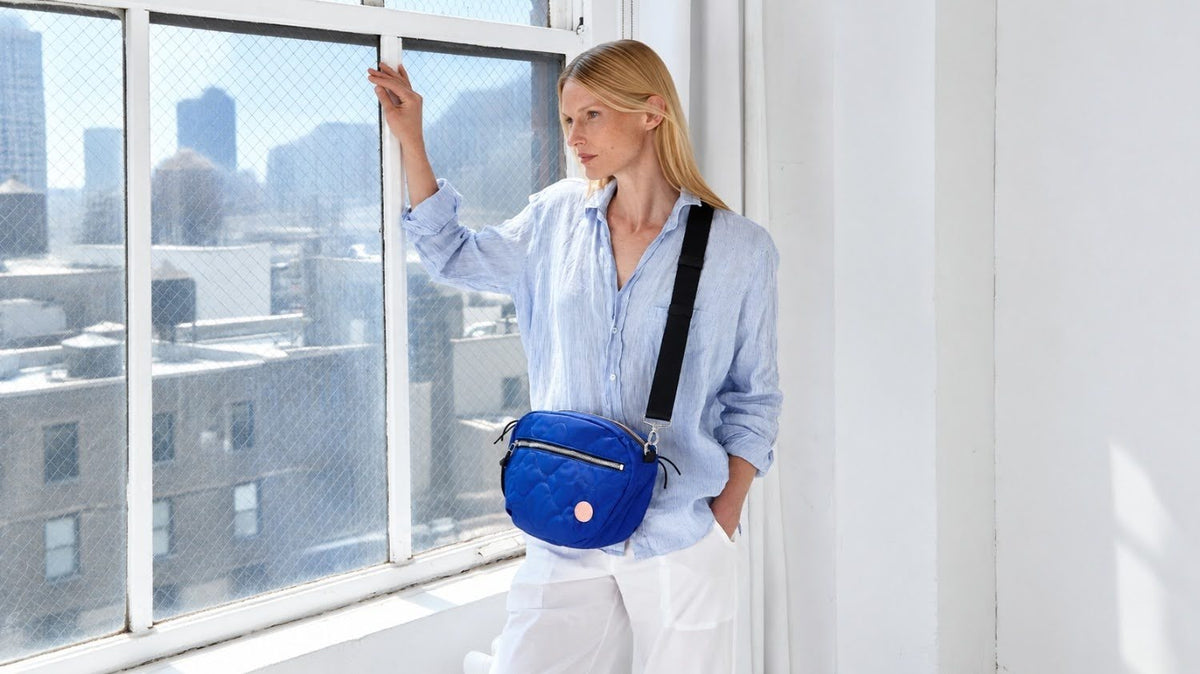
The marcel splits the difference between a crossbody and a tote. The bucket silhouette opens wide for easy loading, the square bottom stands upright, and the zip-top keeps everything contained. It holds more than a flat crossbody but still goes hands-free with the adjustable crossbody strap. Nine colorways in quilted nylon.
When you need both hands free
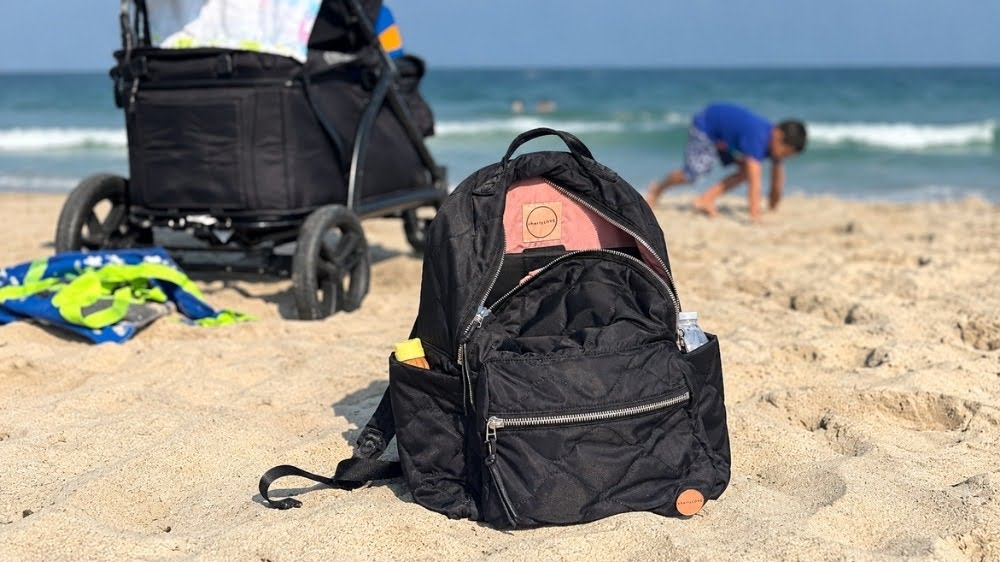
If you are wearing the baby in a carrier or chasing a toddler through a park, a crossbody strap helps but a backpack frees you up completely. The tate has padded straps, two water bottle pockets, a padded 15-inch laptop pocket for a tablet or changing pad, and a zip-top closure. It distributes weight across both shoulders instead of loading one side, which matters more after a few hours of carrying a baby and a bag.
How to organize a non-diaper-bag diaper bag
The organization strategy matters as much as the bag. Without the built-in bottle holders and designated wipe dispensers of a traditional diaper bag, you create your own system.
Use a pouch for the diaper kit: A small zip pouch with three to four diapers, a travel pack of wipes and a tube of cream keeps the messy essentials together and easy to grab. The stevie works well here. Its dopp-kit shape opens wide, the coated nylon interior wipes clean, and at 6 by 7 by 6.375 inches it holds a diaper kit without taking over the main compartment.
Keep bottles upright: Side pockets or a flat-bottom bag prevent leaks. If your bag has deep side pockets, use them for bottles and sippy cups instead of letting them roll around the main compartment.
Put grab-and-go items on the outside: Your phone, keys and a pacifier should live in exterior pockets where you can reach them without unzipping the main compartment. When a baby is crying and you need the pacifier now, you do not want to dig through a layer of spare clothes to find it.
Add a portable changing pad: The biz is a quilted changing mat that folds flat and fits inside any of shortyLOVE's totes or backpacks. It gives you a clean surface for changes without relying on whatever is available in a public restroom.
Restock after every outing: The most common diaper bag failure is not the bag. It is forgetting to refill it. Put diapers, wipes and a clean outfit back in the bag as soon as you get home so it is ready for the next trip out the door.
Your bag should still feel like yours
Becoming a parent changes a lot. Your bag does not have to be one of those things. The right diaper bag alternative carries everything your baby needs, cleans up when things get messy, and still looks like a bag you chose because you like it.
Browse shortyLOVE's tote collection for full-day carry or the crossbody collection for lighter outings. Or take the style quiz to find the format that fits how your days actually go.
Frequently asked questions
What is the best diaper bag alternative for everyday use?
A lightweight nylon tote with a zip-top closure, organized pockets and a flat bottom that stands upright. That combination gives you the structure and access of a traditional diaper bag without the bulky look. For full-day outings, a large tote like the ranger covers bottles, clothes, snacks and your own essentials. For shorter trips, a medium crossbody like the amuse holds a minimal diaper kit in a fraction of the size.
Can I use a regular bag as a diaper bag?
Yes. Any bag can stand in for a traditional diaper bag as long as it has the right features: a structured base that keeps it upright, a material that wipes clean easily, a simple closure you can operate with one hand, and enough compartments to separate baby gear from your own items. The "diaper bag" label adds features like insulated pockets and built-in changing pads, but you can replicate most of those with a zip pouch and a portable changing mat.
What material is best for a mom bag that doesn't look like a diaper bag?
Nylon is the strongest option for balancing style, cleanability and weight. It wipes down in seconds, resists stains from formula and food, weighs less than leather and holds its shape over months of daily use. Coated canvas is a decent backup, but uncoated fabric absorbs moisture and leather shows stains faster than most parents expect.
How do I organize a bag that was not designed as a diaper bag?
Use small pouches to create compartments. Keep a zip pouch with diapers, wipes and cream as one self-contained kit. Put bottles in side pockets or an insulated sleeve. Reserve exterior pockets for your phone, keys and a pacifier. The goal is giving every item a predictable spot so you can find it by feel, not by searching.
Is a backpack or a tote better as a diaper bag alternative?
A tote gives you faster access because you can open it wide and see everything at once. A backpack distributes weight better and frees both hands, which matters when you are carrying a baby or chasing a toddler. For most parents, a tote works best for planned outings where access speed matters, and a backpack works best for active days where you need both hands.
Do I really need a designated diaper bag?
No. Most parents find that a well-organized regular bag handles baby essentials just as well as a traditional diaper bag, especially once the newborn phase passes and you learn exactly what you need for each type of outing. The advantage of skipping the designated bag is that your replacement stays useful long after the diaper years. A nylon tote that carried bottles and wipes at eighteen months carries gym clothes, a laptop and groceries three years later.

Written by sloane grossberg