The Hands-Free Dog Walking Bag: What to Look for When Treats, Keys and Poop Bags All Need a Home
Leash in your right hand. Phone in your left. Poop bag clenched between your teeth because there's genuinely nowhere else to put it. And that's the exact moment your dog spots a squirrel across the street.
If you've ever tried to unlock your front door while holding a full poop bag, a tangled leash and a dog who has absolutely no interest in waiting, you already know the problem. Dog walks generate a very specific pile of stuff that needs to go somewhere accessible, organized and close to your body. The wrong bag turns every outing into a juggling act. The right bag makes the whole thing feel like a normal walk again.
Here's what to actually look for, why most dedicated dog bags miss the mark and which crossbody format handles walks (and the rest of your day) without the paw-print branding.
What Actually Makes a Good Bag for Walks
Forget the cute prints and the bone-shaped zippers. A bag you carry on walks needs to do five things well. Everything else is decoration.
- Hands-free carry: If you're holding the bag with one hand and the leash with the other, you have no hands left for treats, keys, your phone or the part where the dog lunges at a pigeon. A crossbody or sling that sits flat against your body keeps both hands available.
- Quick-access pockets: You need treats in under two seconds during training. You need a poop bag before the dog finishes, not after you've dug through three compartments. Separate pockets with easy closures make the difference between a smooth walk and a frantic one.
- Wipe-clean material: Between muddy paws, treat crumbs, rain and the general chaos of dog ownership, your bag will get dirty. Material that cleans with a damp cloth beats material that absorbs every stain permanently.
- Lightweight construction: You're already carrying the leash, the dog's energy and whatever emotional baggage the squirrels bring. Your bag shouldn't add noticeable weight to that equation.
- Fits the essentials without overpacking: Phone, keys, wallet, treats, poop bags and maybe a small water bottle. That's the list. A bag that tries to fit more than that is a bag that swings, bounces and gets in the way.
The Walk-Ready Bag Feature Checklist
| Feature | Why it matters | What to avoid |
|---|---|---|
| Crossbody or sling strap | Keeps the bag flat against your body and both hands free | Short handles you have to grip or hold on one shoulder |
| Front zip pocket | Fast treat access without opening the main compartment | Single-compartment bags where treats mix with keys and phone |
| Full zip closure | Keeps contents secure when you bend, run or your dog pulls | Open tops or magnetic snaps that pop open under tension |
| Lightweight material | Adds minimal weight to an already full carry | Heavy leather or rigid structured bags over 1 lb empty |
| Wipe-clean surface | Handles mud, drool, treat dust and rain without staining | Untreated canvas or fabric that absorbs moisture |
| Compact footprint | Sits close to your body without bouncing or shifting | Oversized totes or bags that swing when you move |
Crossbody vs Waist Pack vs Dedicated Dog Bag
Three formats show up in every search for the right walk bag. Each has a specific use case and a specific limitation.
Crossbody bags
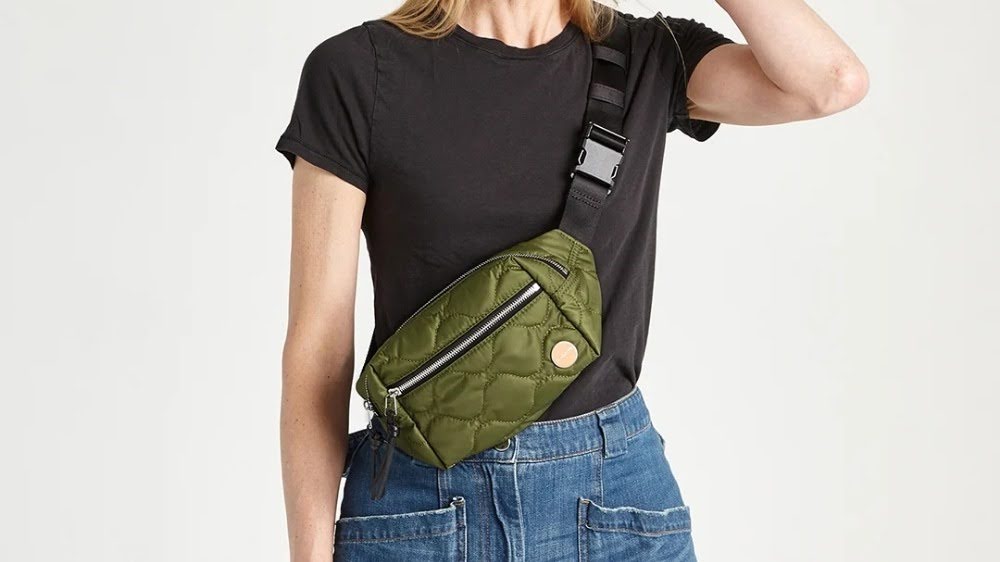
A crossbody sits diagonally across your torso with the bag at your hip. The strap distributes weight across your shoulder and back, which stays comfortable on walks over thirty minutes. You can swing the bag forward for quick access and back again without removing it.
Crossbodies carry enough for a full walk (treats, bags, phone, keys, water) without the bulk of a tote. They also look like a normal bag, which matters if your walk includes a coffee stop, an errand or picking up the kids afterward.
Waist packs
A waist pack (fanny pack) sits at your hips or slightly above. It's great for short, focused outings where you're carrying the bare minimum. Access is fast because the bag is right at your hands.
The downside is capacity. Most waist packs can't fit a water bottle. They bounce when you jog or when a larger dog pulls. They also tend to shift around on your body with movement, which gets annoying on longer walks.
Dedicated dog bags
Purpose-built dog bags often include a built-in poop bag dispenser, a clip-on treat pouch and sometimes a water bowl pocket. The features sound ideal on paper.
In practice, most of these bags are only useful for walks. They're covered in paw prints, bone motifs or the phrase "dog mom." You can't take them to brunch, run errands or use them at pickup without looking like you just came from the dog park. And many of them are made from flimsy nylon that falls apart within a few months.
Why a Regular Crossbody Works Better Than a Dedicated Dog Bag
The best bag for walks might not be marketed as one at all. Here's why a well-designed crossbody checks every box that a dedicated dog bag checks, plus the ones it doesn't.
- Same features, no theme: Quick-access pockets, zip closure, lightweight construction and a crossbody strap that keeps your hands free. That's the same feature set as a dedicated dog bag without the paw-print tax.
- Works for the rest of your day: A dog walking bag crossbody that doubles as your everyday bag means one less bag to own, store and switch between. Walk the dog, grab coffee, run to the store, pick up the kids. Same bag.
- Better materials: Bags designed for everyday use tend to be built from better nylon, with stronger hardware and more thoughtful pocket placement than bags designed to be cute first and functional second.
- No "dog person" signaling required: You love your dog. You don't need your bag to announce that to everyone at the pharmacy.
The Best Bag for Every Walk Type
Different walks need different bags. A quick loop around the block has different demands than an hour-long park session.
| Walk type | What you're carrying | Best format | Best pick |
|---|---|---|---|
| Quick neighborhood loop (15 min) | Phone, one poop bag, keys | Ultra-compact crossbody or sling | Franny -- 0.53 lbs, built-in card slots, wears as belt bag or crossbody sling |
| Standard park walk (30-45 min) | Phone, treats, poop bags, keys, small water bottle | Mid-size crossbody | Amuse -- 0.85 lbs, 10 colorways, fits all walk essentials without overpacking |
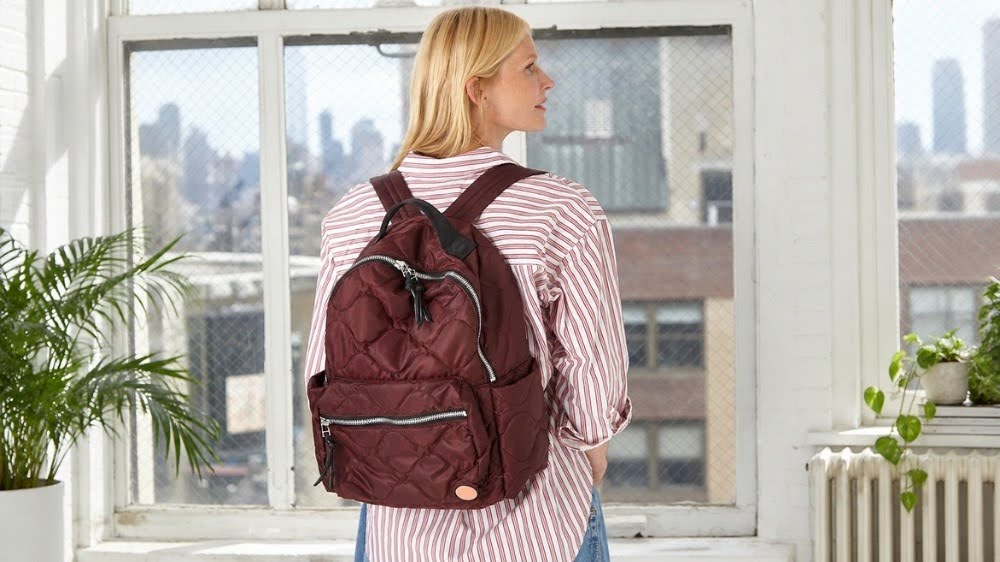
| Long hike or trail walk | Phone, treats, poop bags, keys, water bottle, extra layers | Sporty sling with bottle pocket | Bea -- mesh side pockets for a water bottle, sporty sling format for active days |
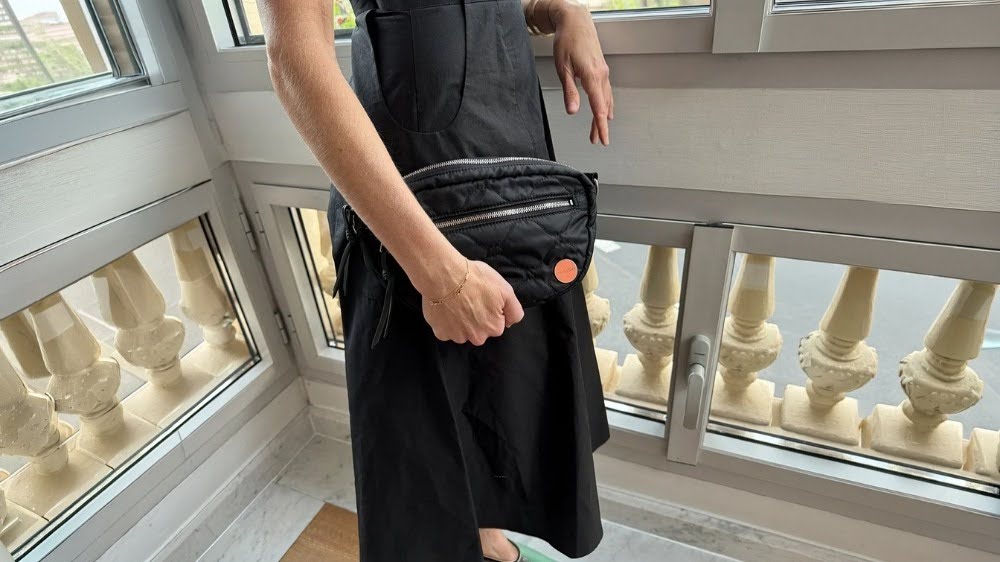
| Errands with the dog | Phone, wallet, treats, poop bags, keys, sunglasses | Compact quilted crossbody | Small Cruiser -- built-in card slots, phone pocket, converts to clutch when you remove the strap |
| Phone-and-keys-only dash | Phone, keys, one poop bag | Phone crossbody | Shorthand -- the smallest crossbody in the lineup, flat against your body |
How to Pack a Crossbody for Dog Walks
Packing a hands-free crossbody for walks is different from packing a bag for work or travel. Speed of access matters more than total capacity.
- Front zip pocket: treats: This is the pocket you'll reach into most often, especially during training. Treats need to be accessible in one motion without unzipping the main compartment.
- Interior zip pocket: poop bags: Keep two or three folded flat in an interior pocket. You don't need the roll dispenser that clips to the outside of dedicated dog bags. A few bags tucked into a zip pocket work just as well and look significantly less like a utility belt.
- Back slip pocket: phone: Your phone goes where you can grab it without opening anything. A back slip pocket (the kind that sits between the bag and your body) keeps it secure and accessible.
- Main compartment: keys, wallet, sunglasses: Everything else shares the main space. If you're carrying a small water bottle, it goes here too.
For owners who carry a larger tote or backpack on some days and want to keep their dog walk supplies organized, the stevie pouch works as a dedicated treat-and-supply kit. Drop it into whatever bag you're carrying that day. Treats, extra poop bags and a few small essentials stay together in one coated, wipeable pouch.
The Nylon Advantage for Dog Owners
Dog walks are messy. Your bag will encounter mud from paws placed directly on it, treat crumbs ground into the lining, rain on every walk you didn't expect to get rained on and the occasional mystery substance your dog found fascinating.
Nylon handles all of it. A damp cloth and mild soap clean the exterior. The interior wipes down just as easily. No conditioning, no dry cleaning, no hoping the stain fades over time. shortyLOVE's nylon twill and quilted nylon surfaces are built for daily contact with real life, which is exactly what dog ownership is.
Canvas and cotton bags absorb moisture, hold stains and get heavier as they get dirtier. Leather needs conditioning and doesn't respond well to mud. Nylon dries fast, weighs almost nothing and looks the same after the hundredth walk as it did after the first.
Find the Bag That Works for Walks and Everything Else
The best dog walking bag is the one you actually want to carry after the walk is over. A crossbody that keeps treats accessible, poop bags tucked away, your phone within reach and your hands completely free handles the walk. The fact that it also handles coffee runs, errands and school pickup is what makes it worth owning.
Every shortyLOVE bag is vegan, cruelty-free nylon that zips shut and ships free. No paw prints required.
Browse the full crossbody collection to find the right fit for your walk, or take the style quiz for a recommendation based on what you carry.
Frequently Asked Questions
What is the best dog walking bag for everyday use?
The best dog walking bag for everyday use is a crossbody that handles walk essentials (treats, poop bags, phone, keys) and transitions to errands, coffee stops and the rest of your day without looking like a pet accessory. Look for a bag under one pound with a zip closure, quick-access pockets and wipe-clean nylon. The amuse from shortyLOVE is the most popular pick for this because it fits a full walk's worth of supplies at 0.85 lbs with an adjustable crossbody strap.
Is a crossbody or waist pack better for dog walking?
A dog walking bag crossbody is the better choice for most walks. It carries more than a waist pack, sits more comfortably on walks over thirty minutes and doesn't bounce or shift when your dog pulls. Waist packs work well for very short outings with minimal gear, but they lack the capacity for treats, a water bottle and a phone all at once.
Do I need a dedicated bag for dog walks?
No. A well-designed crossbody bag has the same features as a dedicated dog bag: hands-free carry, quick-access pockets, zip closure and lightweight construction. The difference is that a crossbody also works for the rest of your day, while a dedicated bag with paw prints and bone-shaped hardware doesn't.
What should I carry in my hands-free dog walking bag?
Keep it focused: treats in the front pocket, two or three poop bags in an interior zip pocket, phone in the back slip pocket and keys in the main compartment. A small water bottle fits in the main compartment of a mid-size crossbody. Skip anything you wouldn't need on a thirty-minute walk.
How do I keep my walk bag clean?
Choose a bag made from nylon or coated nylon. Both wipe clean with a damp cloth and mild soap. Nylon doesn't absorb moisture, doesn't hold stains and dries quickly. Avoid untreated canvas and cotton, which absorb mud, trap crumbs and moisture and need machine washing.
Can I use my regular bag for dog walks?
Yes, if it has three things: a crossbody strap for hands-free carry, a zip closure that stays shut when you bend or move quickly and at least one quick-access pocket for treats. If your current bag is missing any of those, it will slow you down on walks. A crossbody designed for daily use already covers all three.

Written by sloane grossberg