The Best Crossbody Bag for a Hike or Outdoor Day Trip, No Backpack Required
Most day hikes, park walks and outdoor day trips call for a phone, a water bottle, sunscreen, a snack and maybe a light layer. For that kind of carry, a crossbody bag for hiking is a smart lighter option that keeps your hands free and your gear close without loading up more bag than the trail requires.
The right crossbody sits flat against your body, stays put on uneven terrain and gives you quick access to everything you need between trailhead and parking lot. Here's how to pick one that actually works outdoors.
When a Crossbody Makes Sense on the Trail
A crossbody bag for hiking is a great fit for the lighter outdoor days that make up most people's trail time.
-
Morning trail walks: Two to three miles on a groomed path.
-
State park day trips: Moderate trails with stops for photos and snacks.
-
Nature preserve visits: Walking trails with boardwalks and observation points.
-
Beach or lake hikes: Flat coastal paths where you want your hands free.
For all of these, a hands-free bag for a day hike keeps things compact and accessible. For longer treks with more gear, a backpack is the way to go.
What to Look for in a Crossbody Bag for Hiking
Not every crossbody works on a trail. Here's the checklist that separates outdoor-ready bags from city-only bags.
| Feature | Why it matters on a trail | What to skip |
|---|---|---|
| Secure zip closure | Keeps contents safe on uneven ground and during bending or climbing | Open tops or magnetic snaps that pop open |
| Lightweight material | Less fatigue over miles of walking | Heavy leather or stiff canvas |
| Nylon that sheds rain | Handles sudden weather without absorbing moisture | Untreated cotton or suede |
| Water bottle pocket or mesh side pocket | Hydration access without opening the main compartment | No external pockets at all |
| Adjustable strap | Lets you tighten the bag close to your body on steep sections | Fixed-length straps that swing and bounce |
| Wipeable surface | Cleans up after dirt, sunscreen and trail dust | Fabric that stains permanently |
How Much Room Do You Actually Need?
Most day hikers overpack. Here's what a crossbody bag for hiking needs to hold and nothing more.
-
Phone: In a quick-access pocket so you can grab it for photos without stopping.
-
Water bottle: A 16 to 20 oz bottle fits in a mesh side pocket or the main compartment of a medium crossbody.
-
Sunscreen: Travel size. Reapply every two hours on exposed trails.
-
Snack: One bar or a small bag of trail mix. Not a full lunch.
-
Keys and one card: Leave the full wallet in the car.
-
Light layer: A packable windbreaker compresses into a medium crossbody's main compartment.
If that list covers your typical outdoor day, a crossbody or sling handles it. If you regularly carry a first aid kit, trekking poles, a hydration bladder and extra clothing, stick with a backpack.
The Three Crossbody Formats That Work on Trails
The Sling
A sling bag sits diagonally across your chest or back with a single wide strap. It stays close to your body on uneven terrain and swings to the front for quick access. This is the most popular format for a crossbody bag for hiking because it moves with you instead of against you.
The bea from shortyLOVE is built for exactly this kind of active day. Mesh side pockets hold a water bottle upright. The quilted nylon exterior handles dirt and weather without staining. It's the sportiest bag in the lineup and the one designed specifically for walks, hikes, gym trips and errands that involve moving.
The Compact Crossbody
For trail days where you only need a phone, one card and a key, the shorthand sits completely flat against your body and weighs next to nothing. It stays out of the way on narrow paths and steep sections where a bigger bag would shift and bounce.
The small cruiser steps up slightly with built-in card slots, a phone pocket and room for sunscreen and a snack. At 0.7 lbs in quilted nylon, it's compact enough to forget you're wearing it on a moderate trail.
The Everyday Crossbody (the biggest you should go)
The amuse is the largest crossbody worth bringing on a hike. At 10 inches by 11 inches and 0.85 lbs, it fits a water bottle, sunscreen, a snack and a light layer. Anything larger starts to swing on uneven ground and gets in the way if you're using trekking poles. Ten colorways, nylon that wipes clean after a dusty trail and a zip closure that keeps everything secure on the move.
The Belt Bag
A belt bag rides at your waist and barely registers while you walk. It holds less than a sling or crossbody but stays completely out of the way on steep climbs and narrow paths.
The franny weighs 0.53 lbs and wears as a belt bag or a crossbody sling. Built-in card slots replace the need for a wallet. It's the lightest hands-free bag for a day hike in the shortyLOVE lineup.
Crossbody vs Sling vs Belt Bag for Hiking
| Format | Best for | Capacity | shortyLOVE pick |
|---|---|---|---|
| Phone crossbody | Quick trails, phone and keys only | Minimal | the shorthand |
| Compact crossbody | Moderate trails, phone plus snack and sunscreen | Light | the small cruiser |
| Sling | Active day hikes with water bottle | Moderate | the bea |
| Everyday crossbody | Longest day hikes, water bottle plus snack and layer | Largest for trails | the amuse |
| Belt bag | Light walks and minimal carry | Smallest | the franny |
Keep Your Trail Kit Organized
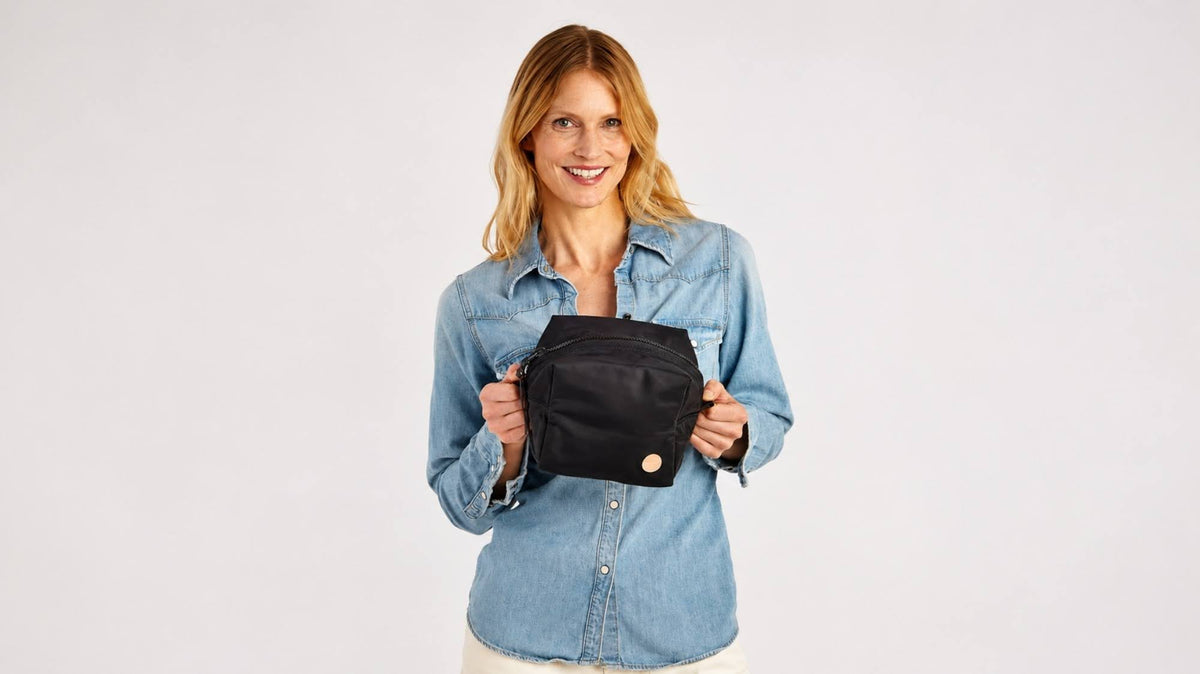
Small items sink to the bottom of any bag on a trail. The stevie is a coated nylon Dopp kit pouch at $88 that solves this. Load it with sunscreen, lip balm and your car key. Drop it into whichever bag you grab for the day. Wipe it clean when you get home.
Hit the Trail Without the Bulk
The best crossbody bag for hiking carries what you need and nothing else. A lightweight nylon crossbody or sling keeps things compact and hands-free for the day hikes and park walks that make up most people's time outdoors.
Every shortyLOVE bag is vegan, cruelty-free nylon that zips shut and ships free. Browse the full collection to find the right fit for your next trail day. Not sure whether a sling, crossbody or belt bag matches how you hike? Take the style quiz for a recommendation in about a minute.
Frequently Asked Questions
Can a crossbody bag work for hiking?
Yes, for day hikes and moderate trails. A crossbody bag for hiking handles the essentials in a compact, hands-free format. Choose one with a secure zip closure, an adjustable strap and a material that handles dirt and weather. Keep the bag small so it stays flat against your body and doesn't interfere with trekking poles or scrambling.
What bag should I bring on a hike?
For a two-to-four-hour day hike on moderate terrain, a crossbody or sling carries everything you need hands-free. For longer hikes with serious gear, a backpack gives you the capacity. If your list is phone, water, sunscreen, a snack and keys, a crossbody bag for hiking covers it.
What size crossbody bag is best for hiking?
A medium crossbody (roughly 10 by 11 inches) or a sling with a mesh water bottle pocket handles the typical day hike. Go smaller (belt bag) for light walks where you only need phone and keys. Go bigger (small backpack) only if you carry extra layers or a full first aid kit.
Is a sling bag better than a crossbody for hiking?
A sling sits higher on your body and stays put better on steep terrain. A flat crossbody sits at your hip and offers more room. Both work as a hands-free bag for a day hike. Slings suit active movement while flat crossbodies suit moderate trails with stops for photos and lunch.
What features matter most in a hiking crossbody bag?
Zip closure, lightweight nylon that sheds rain, an adjustable strap, a water bottle pocket and a wipeable surface. Those five features cover the difference between a crossbody that works on a trail and one that doesn't. Skip bags with open tops, stiff materials or fixed straps that bounce when you walk.

Written by sloane grossberg