How to Select the Most Durable Handbag Material for Your Lifestyle
Your bag’s material affects everything. How heavy it feels before you’ve packed a thing. How it handles a coffee spill on the train. Whether it cracks after six months or looks the same after two years. And yet, most people pick a bag based on how it looks and never think about what it’s made of until something goes wrong.
Understanding handbag material isn’t about becoming a textile expert. It’s about knowing what works for your actual life so you stop spending money on bags that don't hold up. Here’s a breakdown of the most common materials, what they’re actually good (and bad) at, and how to select the best material for your handbag based on how you use it.
The Most Common Handbag Materials (and What They're Really Like)
Not all handbag materials are created equal. Each one comes with trade-offs, and the right choice depends less on what looks good in a store and more on what performs well in your day.
Leather
Leather is the classic. It looks rich, develops a patina over time and signals quality. But it also comes with real downsides for daily use:
- Weight: Leather is one of the heaviest handbag materials. A leather tote can weigh 2-3 lbs empty, which can take a toll on your shoulder and back over a full day.
- Maintenance: It needs conditioning, can stain from water or oils, and doesn’t handle rain well without treatment.
- Price: Quality leather bags tend to sit at the top of the price spectrum, and cheap leather often peels or cracks within a year.
Leather works best for special-occasion bags or styles that don’t see daily use. For everyday carry, the upkeep often outweighs the appeal.
Canvas
- Canvas is durable and casual.
- It’s the go-to for tote bags, market bags and bags that don’t need to look polished. But it can be stiff and uncomfortable, absorbs stains, is hard to clean once dirty, and offers almost no internal structure.
- A canvas bag loaded with daily essentials tends to slump and sag, making it hard to find things inside.
Nylon and Nylon Twill
- Nylon is where function and practicality meet.
- It’s lightweight, easy to clean (most spills wipe right off), holds its shape and doesn’t crack, peel or need conditioning.
- Quality nylon twill takes those properties further with an attractive sheen,softer hand feel and a more refined look that doesn’t read as “sporty.”
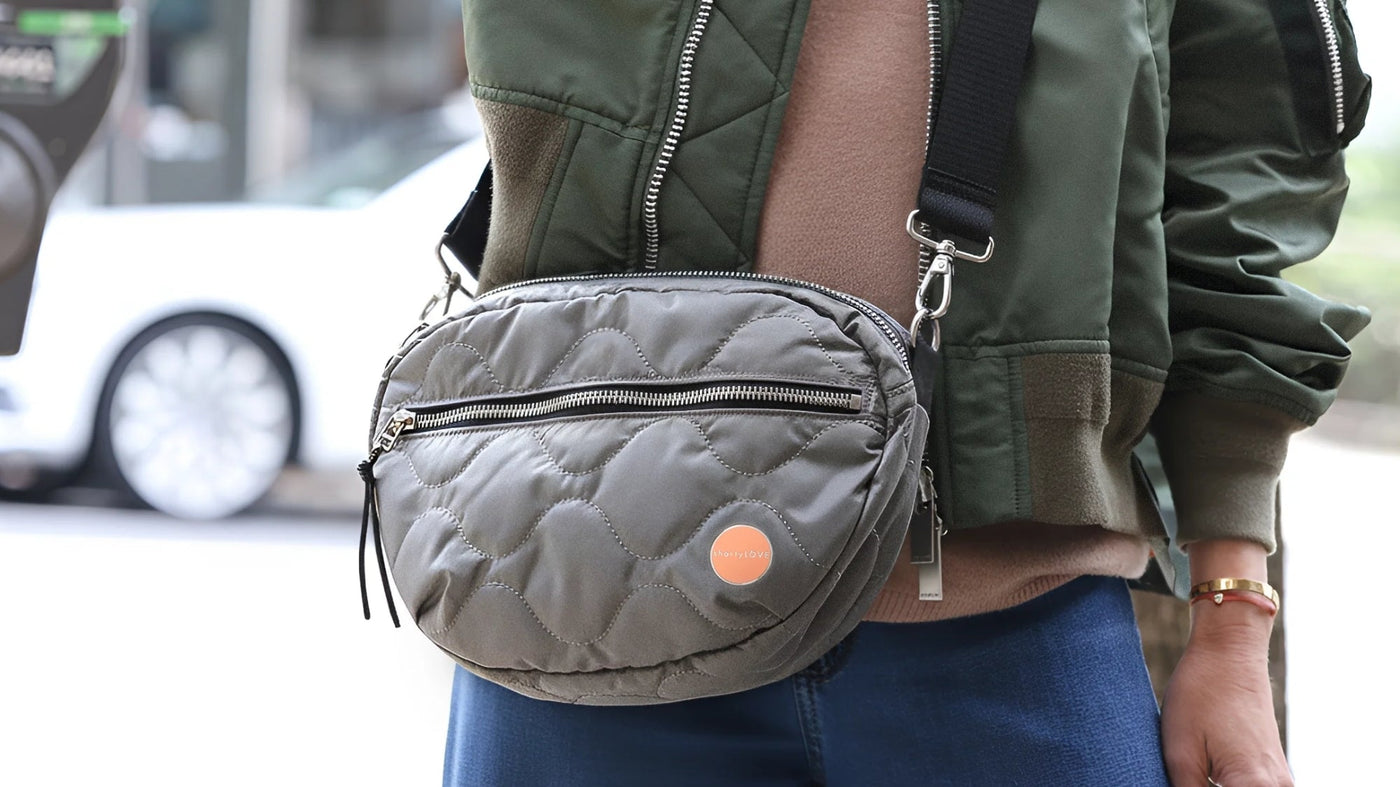
This is the handbag material shortyLOVE builds its entire lineup around. The O.G. collection uses a smooth nylon twill, while the wave quilt collection uses a satin-finish quilted nylon for more texture. Both are vegan and cruelty-free.
Best handbag materials that are durable and soft often come down to the balance between durability and feel. Quality nylon twill is a strong option when you want a material that is soft enough for comfortable everyday use without giving up the durability and easy-care qualities you need from a daily handbag.
Polyester
- Polyester is inexpensive and commonly used in budget bags.
- It resists moisture and wrinkles, but it tends to look and feel cheap.
- It doesn’t age well, often pilling or losing shape after repeated use.
- For a bag you’ll carry occasionally, polyester is fine.
- For daily use, it’s not one of the best handbag materials for daily use.
Faux Leather (PU and PVC)
- Faux leather mimics the look of real leather at a lower price point.
- PU (polyurethane) is the better of the two.
- It’s softer, more breathable and tends to last longer than PVC, which can crack and peel quickly.
- Neither matches the longevity of real leather or quality nylon, but PU is a reasonable middle ground if you want the leather look without the animal products.
How to Choose Based on How You Actually Use Your Bag
The best handbag material for you isn’t the one with the most impressive name. It’s the one that matches your daily reality, made for the life you actually lead.
- You commute every day to work or the gym: You need something lightweight that doesn’t add to your load yet handles the occasional shower as well as the inevitable smudge or spilland. Nylon is the strongest pick here, followed by treated canvas.
- You travel frequently: Weight matters even more — and so does cleanability. Materials for long-lasting handbag performance need to survive overhead bins, airport floors and constant packing and unpacking without showing wear. Nylon wins again.
- You want one bag for everything: Work, weekends, errands, travel. A bag that does all of it needs a material that transitions across settings without looking out of place. Nylon twill in a clean silhouette, like a tillie tote or an amuse crossbody, bridges casual and polished without the maintenance demands of leather.
- You prioritize aesthetics above all: Leather is still the most visually luxurious handbag material, if you’re willing to accept the weight and care requirements. For a collectible or special-occasion bag, it’s hard to beat. Just know you’ll have to baby it.
Material Comparison: What Matters for Daily Carry
| Material | Weight | Durability | Easy to clean | Holds shape | Vegan | Best for |
|---|---|---|---|---|---|---|
| Leather | Heavy | High (with care) | No | Yes | No | Special occasion, formal |
| Canvas | Medium | Medium | No | No | Yes | Casual, market bags |
| Nylon | Light | High | Yes | Yes | Yes | Daily use, travel, work, workout |
| Polyester | Light | Low-medium | Yes | No | Yes | Budget, occasional use |
| Faux leather (PU) | Medium | Medium | Somewhat | Somewhat | Yes | Leather look on a budget |
What shortyLOVE’s Nylon Twill Feels Like
If you’ve only encountered nylon in the form of cheap gym bags or luggage, it’s worth knowing that nylon twill is a different category. The twill weave gives it a softer drape and a more refined surface that doesn’t look or feel “sporty."\” It’s closer in hand feel to a fine fabric than to the stiff, shiny nylon you might be picturing.
Every shortyLOVE bag, from crossbodies to backpacks to totes, is lined with that signature blush nylon so you can see inside your bag instead of digging in a dark cavity. The hardware is premium metal, not plastic. And the stress points are reinforced, which is the kind of durability detail that separates materials for long-lasting handbag performance from bags that fall apart at the seams.
Pick the Material That Fits Your Life
The best durable materials for handbags aren’t always the most expensive or the most traditional. They’re the ones that match how you actually live: how often you carry a bag, what conditions it faces, how long you want it to last and how much time you’re willing to spend maintaining it.
If easy care is high on your list, look for stylish durable handbags that are easy to clean without sacrificing the look you want. Nylon and quality nylon twill are particularly practical when you want a polished bag that can handle everyday spills and regular use.
Browse shortyLOVE’s full collection to see what premium nylon twill looks like across crossbodies, totes, backpacks and accessories. Or take the style quiz if you’re not sure which style fits your daily routine.
Frequently Asked Questions
What is the best handbag material for everyday use?
Nylon is the best handbag material for daily use because it’s extremely durable and lightweight, easy to clean, holds its shape and doesn’t need the conditioning or weather protection that leather demands. It’s one of the most practical choices for women who carry a bag every day across multiple settings.
What is the most durable handbag material?
Full-grain leather and quality nylon are among the most durable handbag materials, but the better choice depends on how you use your bag. Full-grain leather can last for decades with proper care, while quality nylon can deliver years of heavy everyday use with much less maintenance. If you want durability with a lightweight, easy-care finish, quality nylon is a particularly practical choice.
How do I select the best material for my handbag?
Start with how you’ll use it. If you need something for daily commuting and travel, prioritize lightweight, cleanable materials like nylon. If you want a bag for special occasions, leather or high-quality faux leather may be worth the trade-offs. Match the material to your routine, not the other way around.
What should I look for when buying a quality handbag?
Look beyond the outer material. A quality handbag should use a durable material that suits how you carry it, hold its shape well, have reinforced stress points, and use hardware and construction that can stand up to regular use. If you want a daily bag, also consider weight, how easy it is to clean, and whether the material feels soft and comfortable enough to carry.
What are the most sustainable handbag materials to consider?
Sustainability in handbag materials is more about longevity than raw material alone. A durable nylon bag that lasts year after year has a much smaller footprint than a fast-fashion faux leather bag replaced annually. Vegan and cruelty-free materials avoid animal agriculture entirely, which is another factor worth weighing.
Is nylon better than leather for handbags?
For daily use, yes. Nylon is lighter, easier to clean, doesn’t crack or peel and doesn’t require conditioning. Leather has a longer visual heritage and develops a patina, but it’'s heavier and needs more care. The best choice depends on whether you prioritize low maintenance or traditional aesthetics.
What materials make a handbag last the longest?
Full-grain leather and quality nylon are the best durable materials for handbags in terms of longevity. Leather lasts decades with proper care, but nylon lasts years with little to no care at all, which makes it the more practical option for bags that see heavy daily use.
Does handbag material affect weight?
Significantly. Leather bags can weigh 2-3 lbs empty, while a nylon bag the same size might weigh under 1 lb. Over a full day of carrying, that difference adds up. If weight matters to you, nylon is the lightest option that still holds its structure.

Written by sloane grossberg